How AI Is Reshaping Jobs in Asia: What Students and Fresh Graduates Need to Know
On October 12, 2026, the IMF's Annual Meetings included a presentation titled "Labor Markets in Asia: Challenges and Opportunities in the Age of AI." Divya Kirti of the IMF's Asia and Pacific Department presented it. According to the programme page, it draws on millions of online job postings from across Asia and offers some of the first evidence on how AI is reshaping the region's labor markets.
If you are a student or a fresh graduate, this matters to you directly. Here is what the available research says, and how you can prepare.
1. AI skills are showing up in more job ads
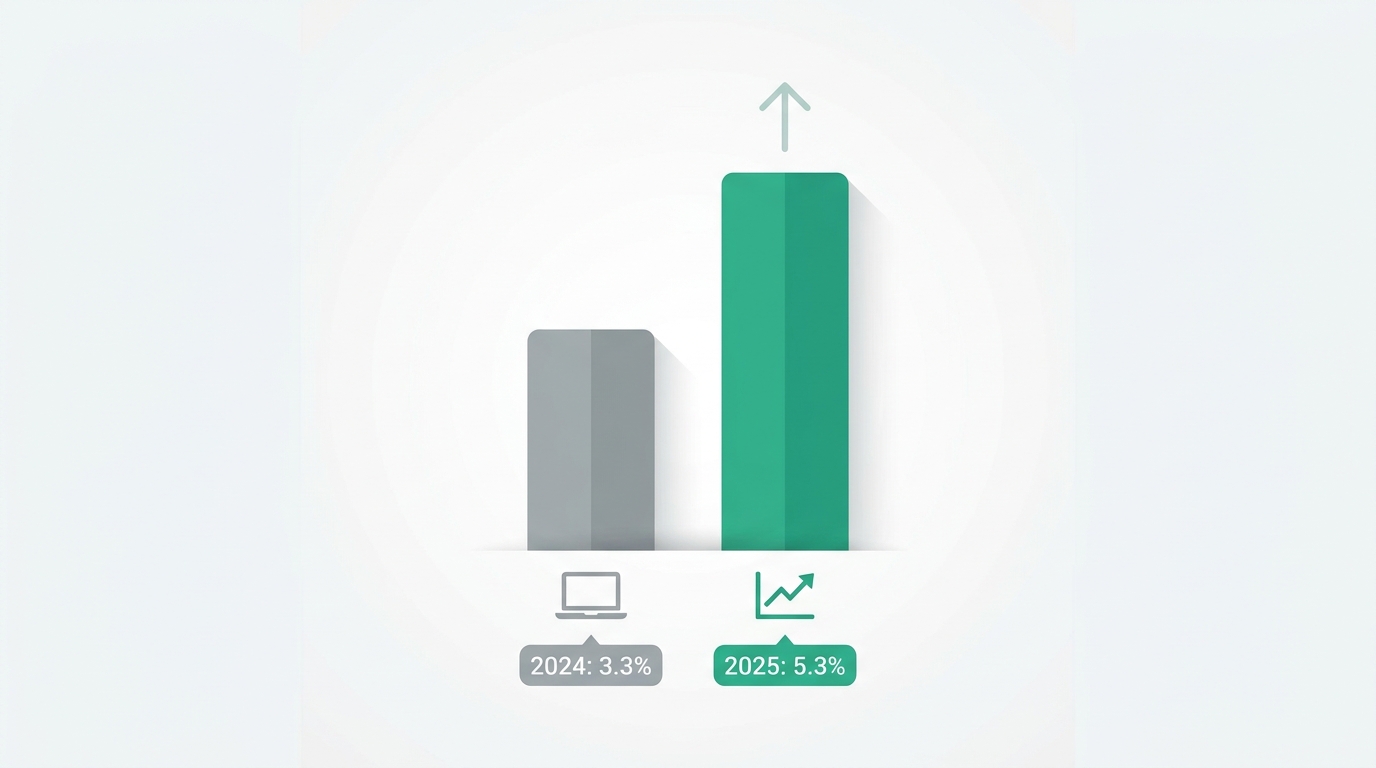
PwC's 2026 Global AI Jobs Barometer analyzes over one billion job ads across six continents. In its Singapore edition, the share of job postings requiring AI skills rose from 3.3% in 2024 to 5.3% in 2025. The Hong Kong analysis also found that every sector there saw a higher share of AI jobs in 2025 than in 2024.
Singapore: share of job postings requiring AI skills
2024: 3.3%
2025: 5.3%
Source: PwC 2026 Global AI Jobs Barometer, Singapore edition
2. Most demand is for people who use AI, not build it
This is the most useful finding for students. In Singapore, around 82% of AI-related job postings are for AI user roles, and the rest are for AI developers. In Hong Kong, AI user roles grew by about 6,900 positions in 2025, while AI developer roles grew by only 87.
You do not need to become a machine-learning engineer to benefit. Knowing how to use AI well inside your own field (finance, marketing, design, teaching, engineering) is where the wider opportunity lies.
3. Digital skills come with a pay premium
The ADB analyzed more than 6 million job postings across Asia and the Pacific, using a large language model to classify the digital and AI skills each job required. Its main findings:
More than 10% of postings require advanced digital skills, such as programming, cloud services, or working with AI and big data.
Jobs requiring basic digital skills pay around 6% more than similar jobs requiring none.
AI skills carry an even higher wage premium.
Jobs that required no digital skills in 2019 now much more often require basic ones.
4. Jobs are changing more than they are disappearing
PwC reports that jobs requiring AI-augmented skills, such as judgement, creativity and leadership, are growing about eight times faster than the general job market. In several Asian markets, including Hong Kong, Japan and mainland China, postings have grown faster in less AI-exposed occupations. The effect of AI is uneven, not uniform.
What students and fresh graduates should do
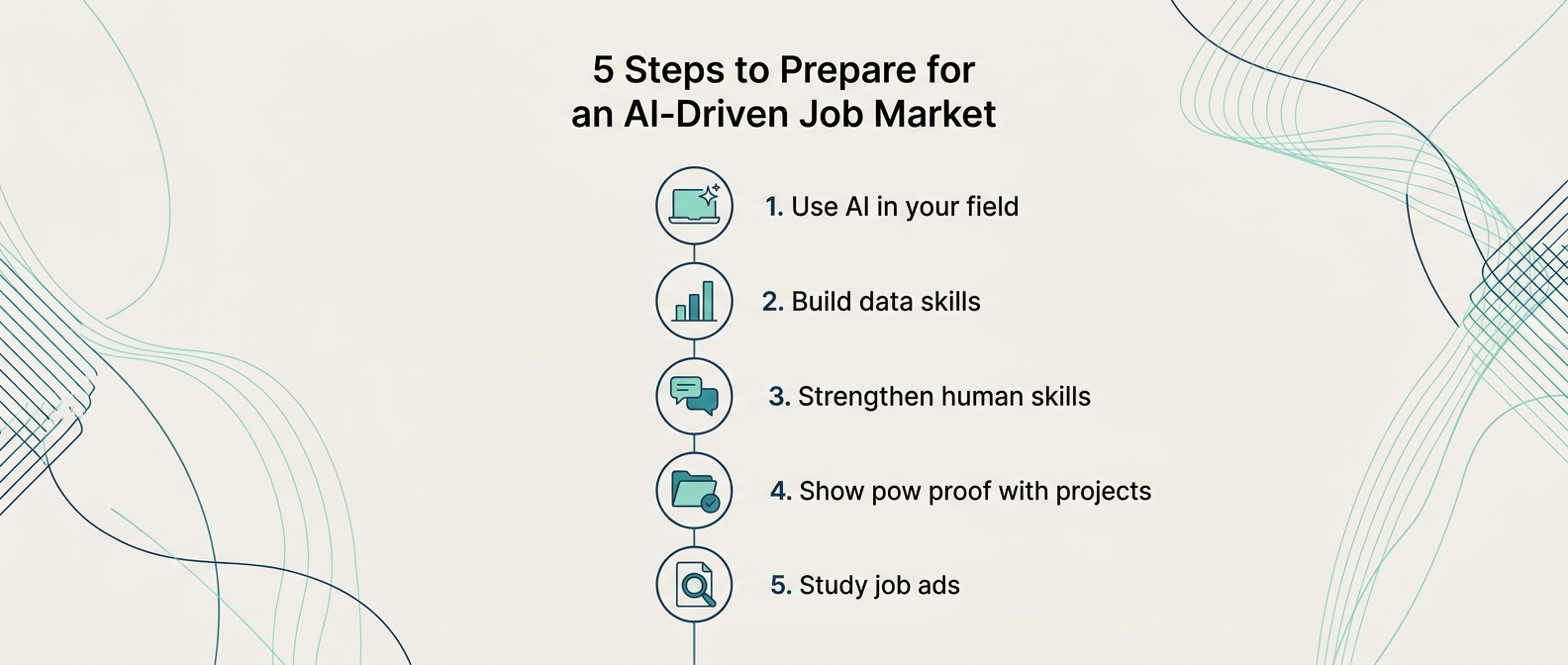
Learn to use AI inside your own field. Employers increasingly want people who can do their normal job faster and better with AI, not only technical specialists.
Build basic data skills. Spreadsheets, cleaning data, and making simple charts are the kind of basic digital skills the ADB found are now required in many jobs.
Strengthen human skills. Communication, judgement, creativity and leadership are the skills PwC finds becoming more valuable alongside AI.
Show proof, not just claims. Build two or three small projects where you used AI to solve a real problem, and put them on LinkedIn or a portfolio site.
Study job ads. Collect 20 postings for the role you want and note which skills appear again and again. Let the market guide your learning.
What this data can and cannot tell us
Online job postings give timely signals about what employers want, but they are not a substitute for labor force surveys. They can underrepresent jobs that are never advertised online, which matters in economies with large informal sectors. PwC itself cautions that postings data may show only a partial picture of a labor market.
That is why claims like "AI will eliminate millions of jobs" cannot be proven by this data. What it does show is that the skills employers ask for are shifting, and that new roles are being created.
The bottom line
The evidence so far points to a changing job market, not an empty one. Graduates who combine their field knowledge with AI, data skills and strong human skills will be best placed. Start small, build proof, and keep learning.
Sources