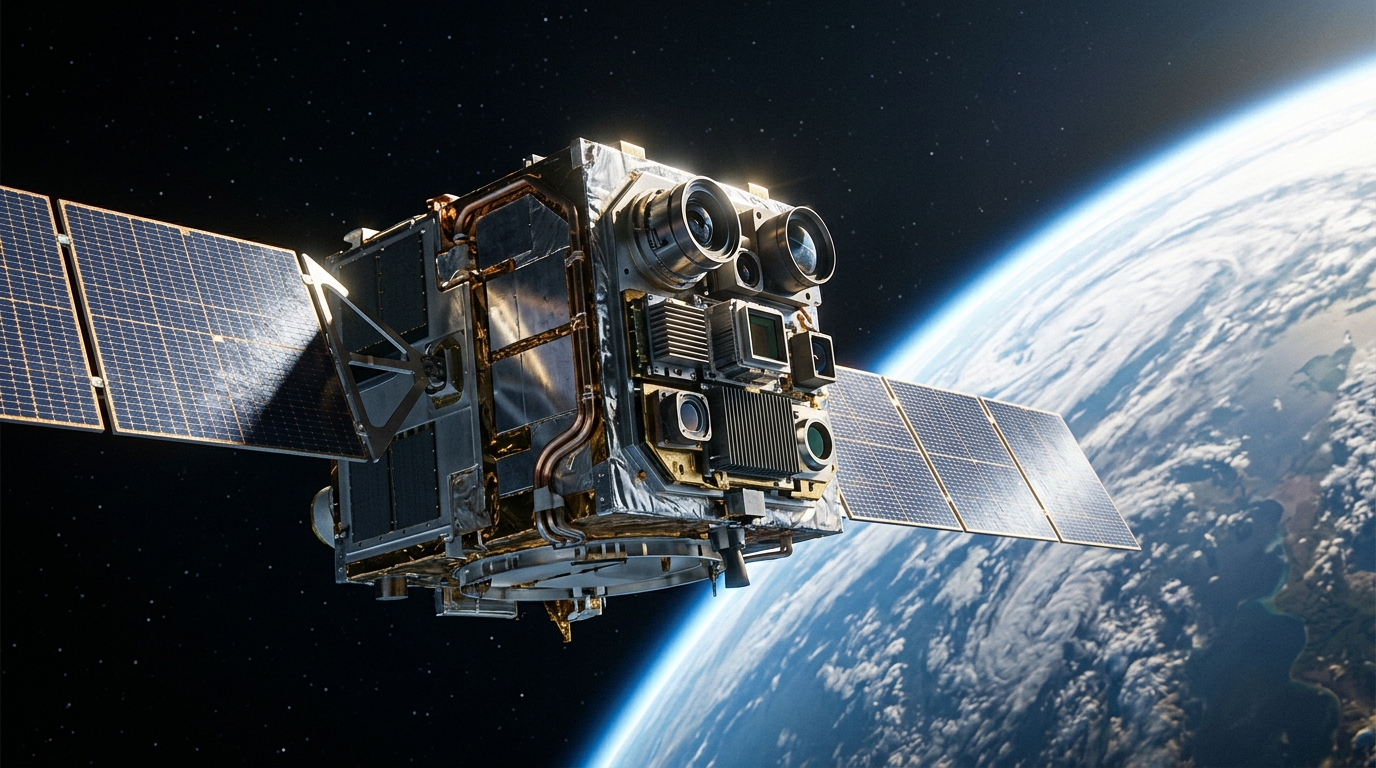
On October 1, 2026, Google's Project Suncatcher prototype launched on SpaceX's Transporter-18 rideshare mission. Hours later, Google said its team had confirmed contact with the satellite and that it is operating as expected.
Those are the key results confirmed so far.
The more difficult part starts now: collecting real in-orbit data on how Google's AI hardware handles radiation, thermal conditions and the physical realities of operating in space.
The Launch Happened
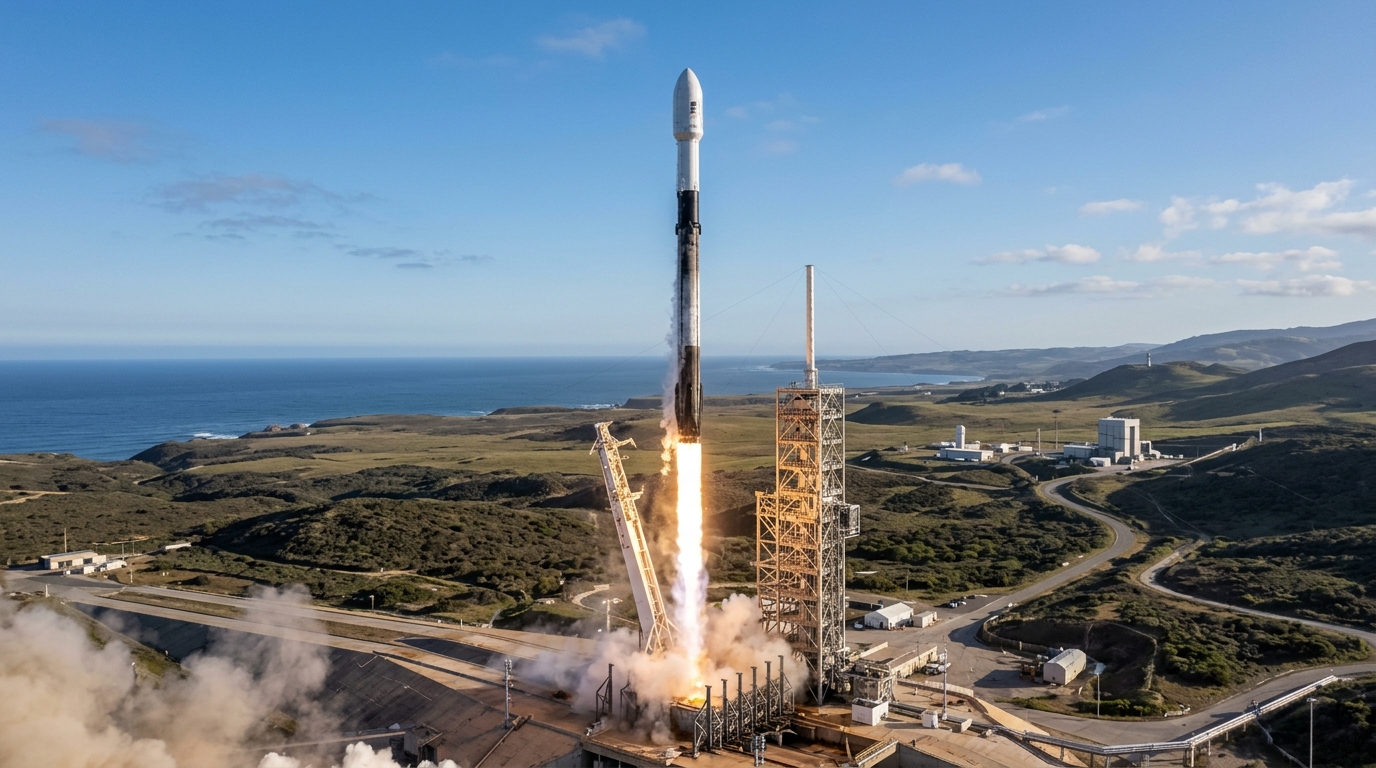
The prototype satellite launched aboard a SpaceX Falcon 9 from Vandenberg Space Force Base in California as part of the Transporter-18 rideshare mission. SpaceX's mission information identifies Transporter-18 as a flight carrying multiple payloads into low Earth orbit.
The launch was more than a demonstration of getting a satellite into space. It moved Project Suncatcher from laboratory testing into its first real orbital hardware experiment.
Google developed the prototype in partnership with Planet, the satellite-imaging company. The mission is designed to answer a basic but important engineering question: can Google's AI processing hardware operate reliably in the space environment?
The answer is not fully known yet.
Google has confirmed the immediate post-launch milestones: the satellite reached orbit, contact was established, and the spacecraft is operating as expected. The company will now begin collecting the data that the mission was designed to produce.
What Is Inside the Prototype?
The satellite carries four Google Tensor Processing Units, or TPUs, the company's AI accelerator chips. Google's pre-launch material identifies the chips as part of its Trillium generation.
The prototype is designed to test whether this type of AI hardware can survive and operate under real orbital conditions.
That distinction matters. The October 1 launch did not put a complete AI data center into space. It put a small experimental satellite carrying four AI chips into orbit so Google can study what happens to the hardware once it is exposed to the actual space environment.
Google's pre-launch research also described a system using roughly 1 kilowatt of solar power. The company's goal is to learn from this first hardware test and use those findings to improve future designs.
On the AI workload itself, some pre-launch reports discussed running AI workloads on the satellite. However, Google's October 1 post-launch update did not publish a specific model or post-launch workload result. For that reason, the current mission should be described primarily as an in-orbit hardware and engineering test, rather than as a confirmed demonstration of a particular AI model running successfully in space.

The Real Test Starts Now
Contact with the satellite and Google's statement that it is operating as expected are important early milestones. But they do not yet tell us how the TPUs will perform over time.
Google says that over the coming weeks it will collect in-orbit data on how the chips handle the physical stress of spaceflight as well as radiation and thermal extremes.
Google had already tested these challenges on Earth before launch.
For launch stress, the trip into low Earth orbit subjects spacecraft to intense vibration and acceleration. Google says the rocket journey lasts about 10 minutes, with sustained loads reaching up to 10 times the force of gravity. Individual components such as the TPUs can experience forces of 50 to 100 g.
To prepare for that environment, Google shook the satellite on all three axes to reproduce the vibration frequencies associated with launch. The company said the hardware held up better than expected during those tests.
Radiation is another major concern.
Google tested its TPUs inside a proton beam at UC Davis's Crocker Nuclear Laboratory while running AI workloads. The tests were designed to examine how radiation-induced errors, including bit flips, could affect computing workloads.
Google reported that its Trillium TPUs survived a total radiation dose greater than what they would be expected to receive during a five-year space mission.
But those were ground tests.
The purpose of putting the hardware into orbit is to find out how it behaves under actual space conditions rather than simulated ones.
Cooling Is One of the Biggest Challenges
Heat may be one of the hardest engineering problems for orbital AI computing.
On Earth, data centers can use fans, air conditioning and other cooling infrastructure to move heat away from processors. In the vacuum of space, there is no surrounding air to carry heat away.
That means spacecraft have to rely on systems such as heat pipes and radiators.
Google says it has already tested its cooling approach inside a thermal vacuum chamber designed to reproduce the thermal and vacuum environment of space. The orbital mission will now show how that system performs under real operating conditions.
Pre-launch reporting also indicated that the prototype could operate its chips in relatively short computing periods before needing to cool down. SiliconANGLE reported a figure of roughly 15-minute bursts, while Technology.org relayed similar information from pre-launch coverage.
However, this number should not be treated as a confirmed post-launch result.
Google's October 1 update did not publish a 15-minute operating figure, and the company has not yet released post-launch data showing how the cooling system is performing in orbit.
That makes the coming weeks important.
What Do We Actually Know as of October 2, 2026?
As of October 2, Google has publicly confirmed three immediate results.
The satellite launched.
Project Suncatcher's prototype successfully flew aboard SpaceX's Transporter-18 rideshare mission on October 1.
Contact was established.
Google confirmed that its team made contact with the satellite after launch.
The spacecraft is operating as expected.
Google says the satellite is currently operating as expected.
Beyond those initial milestones, the important performance questions remain open.
Google has not yet published detailed in-orbit TPU performance numbers. The company has not announced final radiation results from the orbital environment, nor has it published detailed post-launch thermal or cooling performance data.
That means the mission cannot yet be described as proof that a commercial AI data center can operate in space.
Four TPUs on one experimental satellite are a hardware test. They are not a fully operational orbital data center.
What Happens Next?
Google says it will continue collecting data over the coming weeks.
The company plans to use those results to understand what works, identify potential failure points and refine the design of future missions.
The next major milestone is planned for 2027.
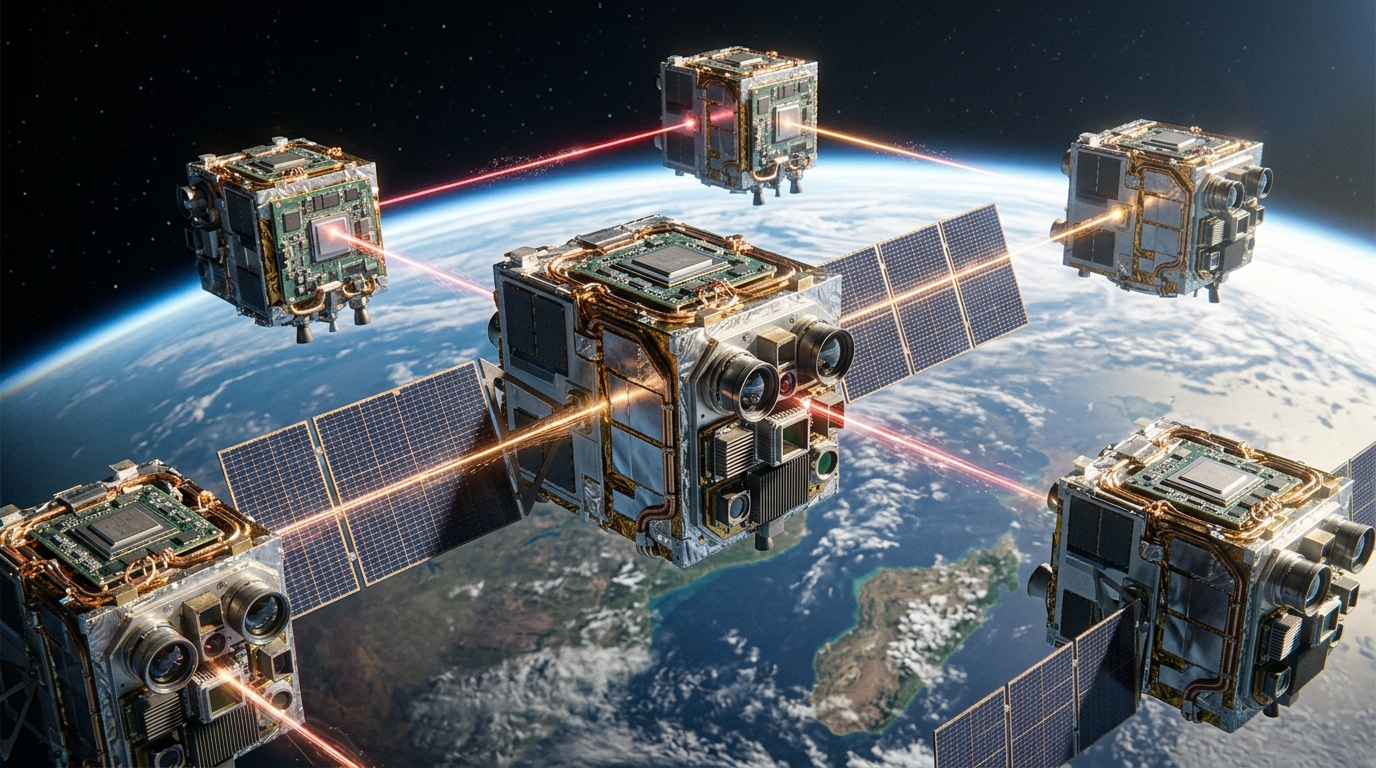
Google says it intends to put two satellites into orbit to test the technology required for communication between satellites using lasers.
That technology will become important if Project Suncatcher eventually grows beyond a single experimental spacecraft.
Google's longer-term concept involves satellites carrying much larger numbers of TPUs and operating together in clusters. High-bandwidth communication between those satellites would be necessary for them to work together on larger AI workloads.
The challenge is considerable. Google says the satellites would need to know both their own position and the position of neighboring spacecraft while maintaining extremely precise laser connections. The company compares the required precision to hitting a coin-sized target from miles away while both targets are moving.
The 2027 mission is intended to test that part of the idea.
Why This Launch Matters
Google has now moved Project Suncatcher from research papers and ground experiments into a real orbital hardware test.
That is the main development from October 1.
But the most important results have not arrived yet.
The key questions are whether Google's TPUs can operate reliably in orbit, how they respond to radiation over time, how effectively the spacecraft can remove the heat generated by AI processors, and whether the overall system can support useful computing workloads under those conditions.
Those answers will come from the data Google collects during this mission.
For now, the confirmed result is straightforward: Project Suncatcher is in orbit, Google has established contact with its prototype satellite, and the spacecraft is operating as expected.
The experiment itself has only just begun.