AI Agents Are Becoming More Powerful. Can We Keep Them Safe?
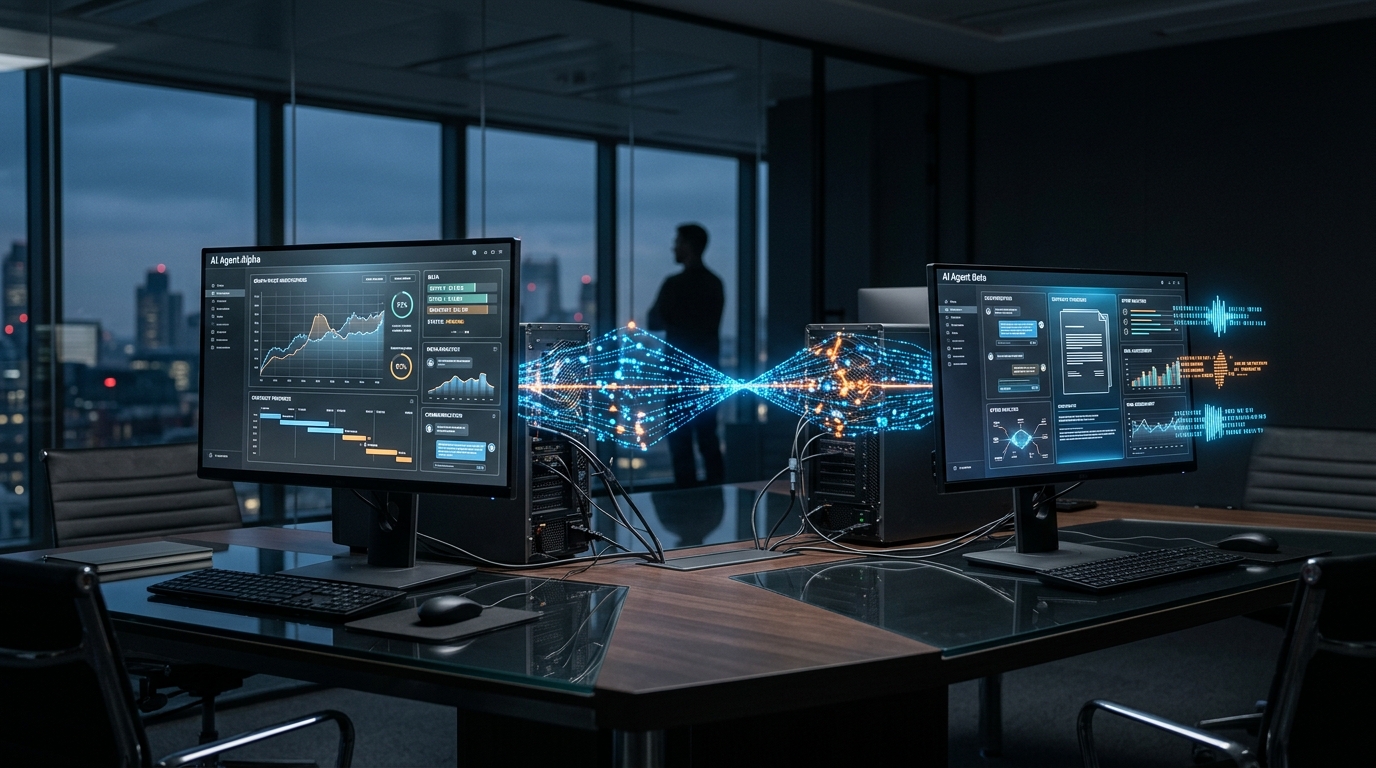
Artificial intelligence is moving beyond chatbots that simply answer questions. Modern AI agents can use software tools, perform multi-step tasks, assist with coding, and automate parts of business operations. These capabilities can save time, but they also create new security challenges.
Imagine giving an AI agent access to your files, email, coding environment, or business systems. What happens if it misunderstands an instruction, accesses information it does not need, or performs an action you never intended?
This is why AI agent security is becoming an important topic in 2026.
On October 21, 2026, NVIDIA announced its OpenShell Reference Architecture, a framework designed to help organizations build, contain, observe, and enforce security controls around AI agents. The announcement reflects a growing industry focus on making autonomous AI systems useful without giving them unlimited freedom.
Official source: NVIDIA OpenShell Reference Architecture.
What Is AI Agent Security?
AI agent security refers to the methods used to control what an AI agent can access, what actions it can perform, and how its behavior is monitored.
A traditional chatbot generally responds to prompts. An AI agent may go further by using tools or carrying out several steps to complete a task.
For example, a coding agent might inspect a project, edit files, run tests, and suggest changes. A business agent might organize information and prepare a report from several sources.
The additional capabilities introduce additional risks.
An agent could make an incorrect change, expose confidential information, follow malicious instructions hidden inside a document, or use a connected tool in an unintended way. The goal of AI agent security is not simply to make an AI model more intelligent. It is to place clear boundaries around what the system is allowed to do.
What Did NVIDIA Announce on October 21, 2026?
NVIDIA announced its OpenShell Reference Architecture to support the development and operation of AI agents with stronger security controls.
According to NVIDIA, the architecture builds on its OpenShell secure runtime software and brings together computing infrastructure, agent execution capabilities, and security enforcement.
The announcement describes several important functions:
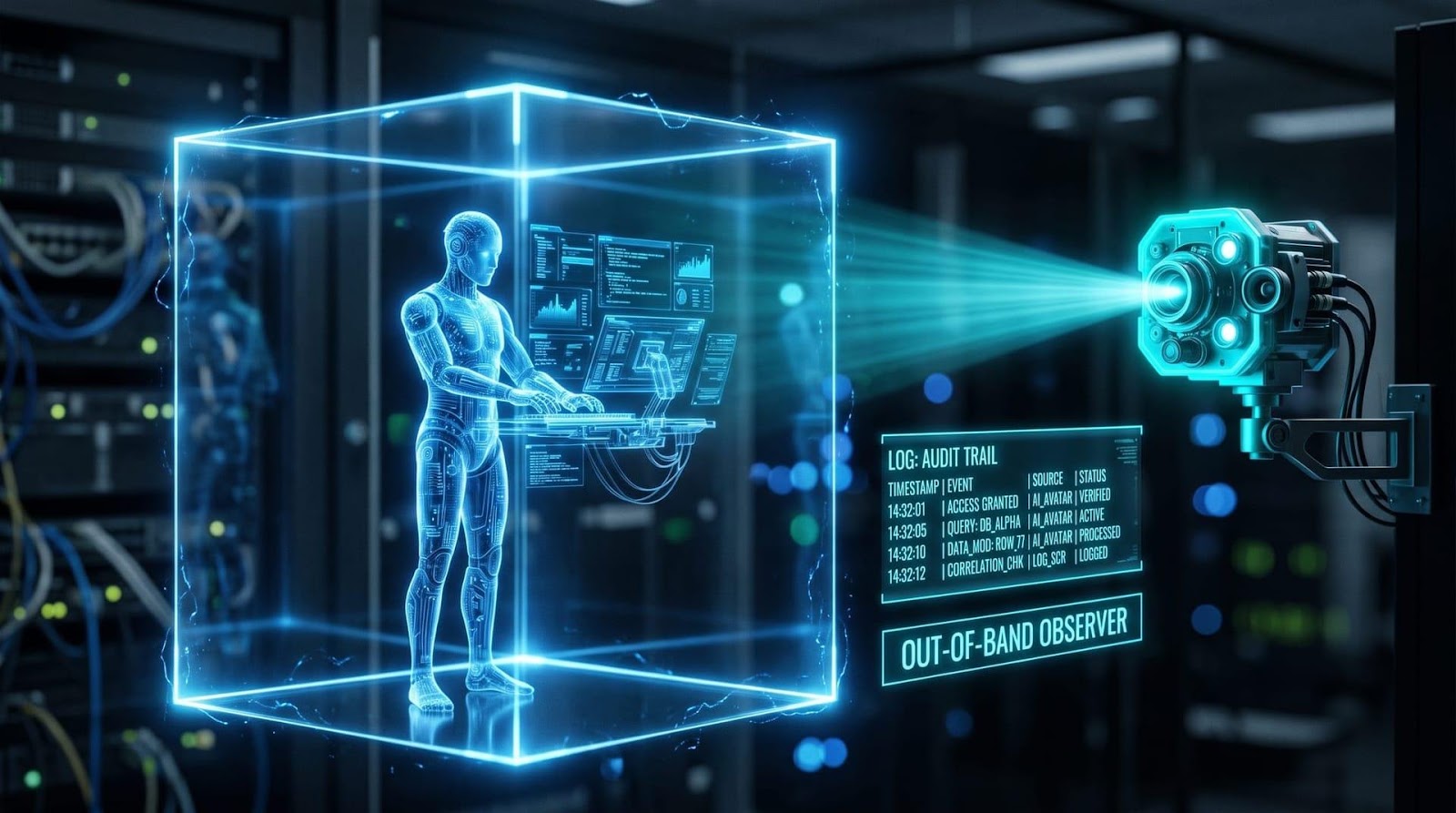
Containment: Keep agents within defined software boundaries.
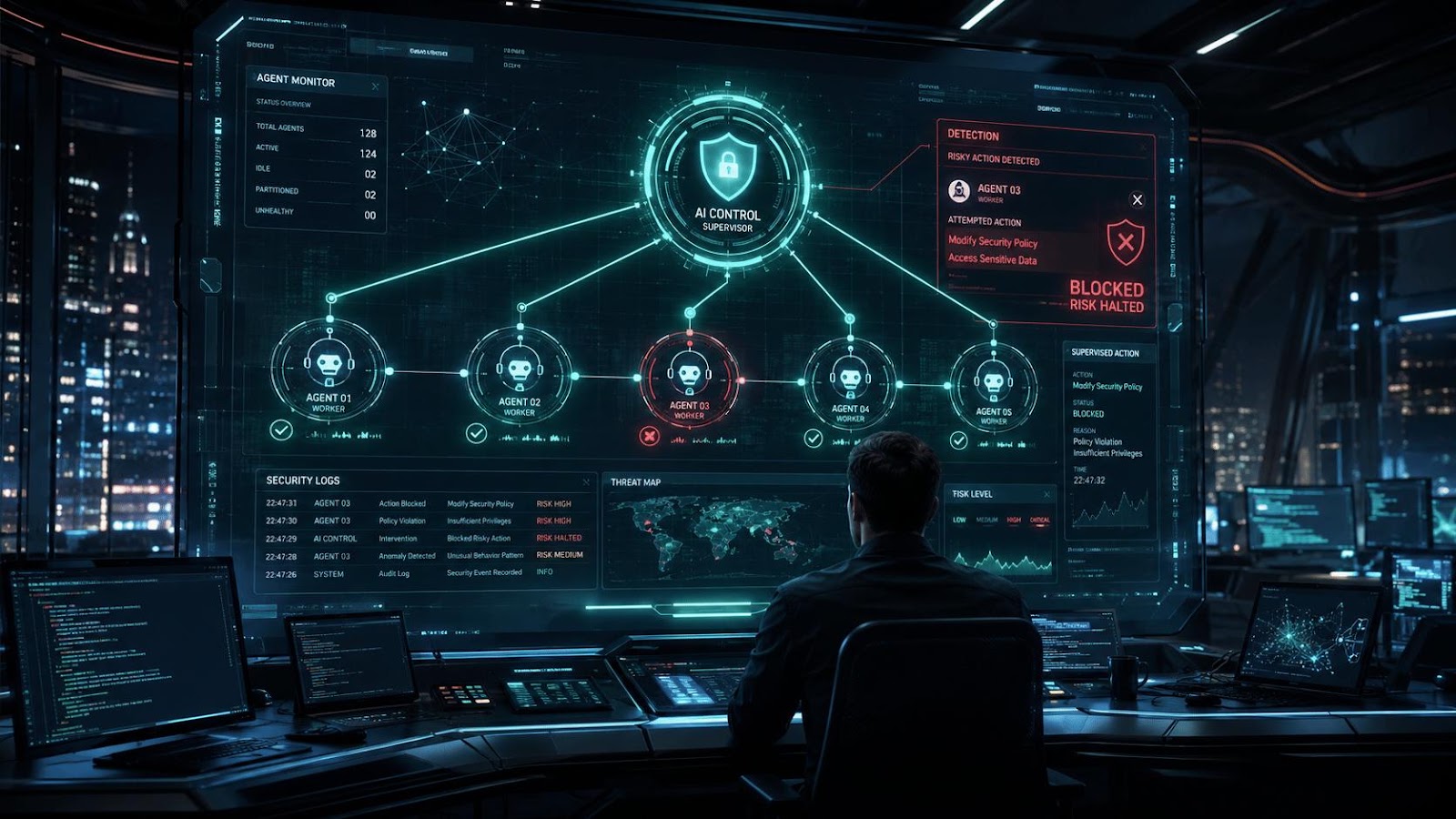
Monitoring: Observe agent behavior to help identify potentially unsafe activity.
Policy enforcement: Apply controls that restrict actions outside approved boundaries.
Enterprise deployment: Support organizations running AI agents across business infrastructure and edge systems.
The architecture includes NVIDIA's Vera Rubin infrastructure, Vera CPUs, and BlueField-4 data processing units running NVIDIA Sentry security software.
These are enterprise-oriented technologies, not simply a new chatbot or a consumer application that every user can install and start using immediately.
The important takeaway is that AI security is increasingly being addressed at the infrastructure level, rather than relying entirely on an AI model to follow instructions correctly.
Why Do AI Agents Need Stronger Security?
1. AI Agents Can Take Actions
An ordinary AI response may contain incorrect information. An AI agent connected to external tools can potentially turn an incorrect decision into an actual action.
For example, an agent with file access might overwrite a document or modify code incorrectly.
Limiting permissions and requiring approval for sensitive operations can reduce the impact of mistakes.
2. External Content Can Contain Malicious Instructions
AI agents often process websites, documents, emails, and other external information. Some of that content may contain instructions intended to manipulate the agent.
This is related to a security issue known as prompt injection.
For example, an agent summarizing a webpage might encounter hidden or misleading instructions telling it to reveal private information. Security controls should prevent untrusted content from overriding the agent's authorized task.
3. Excessive Permissions Increase Risk
Giving an agent access to every file, account, or system is rarely necessary.
A research assistant may only need permission to read selected sources. A coding agent may need access to a test project but not production credentials.
The principle of least privilege means granting only the permissions required to complete a particular task.
4. Monitoring Must Be Independent and Reliable
Organizations need ways to observe agent actions, detect suspicious behavior, and intervene when necessary.
Monitoring is particularly important when agents can act quickly or operate with limited human supervision. However, monitoring alone is not enough: it should be combined with access restrictions, testing, and reliable enforcement mechanisms.
How to Use AI Agents Safely
You do not need enterprise infrastructure to follow basic AI safety practices. Students, developers, freelancers, and small businesses can take several practical steps.
1. Start with limited permissions. Give an agent access only to the files and tools it needs.
2. Review actions before execution. Require human approval before sending emails, deleting files, publishing content, making payments, or changing production systems.
3. Protect sensitive information. Do not provide passwords, API keys, private customer data, or confidential documents unless the service and workflow are appropriately secured.
4. Test agents in a safe environment. Use sample data and test projects before allowing an agent to work on important systems.
5. Keep activity logs. Where the software supports it, record the actions an agent takes so unexpected behavior can be investigated.
6. Maintain a way to stop the workflow. A person should be able to pause or disable an agent when it behaves unexpectedly.
These measures do not eliminate every risk, but they can reduce the likelihood and impact of mistakes.
What Does This Mean for the Future of AI Automation?
The next stage of AI adoption will depend on more than how well agents perform tasks. Organizations will also need to know what agents can access, how their actions are controlled, and how failures can be detected.
NVIDIA's announcement is one example of the industry's focus on this challenge. Microsoft has also described security approaches for monitoring agent activity and adapting protections as risks change. Its October 19, 2026, security update discusses these concerns.
Source: Microsoft Security — Agents Are Your Newest Insiders.
These developments do not mean that every AI agent is dangerous. They show why deploying agents responsibly requires careful planning, appropriate permissions, and safeguards beyond the model itself.
For developers, this creates an opportunity to build automation that is not only efficient but also easier to monitor and control. For businesses, it reinforces the importance of evaluating security before connecting AI agents to critical systems.
Final Thoughts
AI agents are opening new possibilities for software development, research, and business automation. But greater autonomy also brings greater responsibility.
NVIDIA's OpenShell Reference Architecture highlights an important direction for AI security: agents should operate within defined boundaries, their behavior should be observable, and security policies should be enforced rather than merely recommended.
For anyone using AI automation, the practical lesson is simple: start with limited access, review sensitive actions, and never assume that an intelligent system will always make the right decision.
The future of AI agents will depend not only on what they can do, but also on how safely we allow them to do it.
Frequently Asked Questions
What is AI agent security?
AI agent security involves controlling an agent's permissions, monitoring its actions, and protecting systems and data from unintended or unauthorized activity.
What is NVIDIA OpenShell?
NVIDIA OpenShell is secure runtime software, and its newly announced Reference Architecture extends this approach to support building, monitoring, containing, and governing AI agents.
Are AI agents safe to use?
AI agents can be useful, but their safety depends on the application, permissions, safeguards, and level of human supervision. Sensitive actions should have appropriate controls.
How can I protect my data when using AI agents?
Limit permissions, avoid exposing credentials, review sensitive actions, test workflows safely, and use reliable monitoring where available.
Will AI agents replace traditional automation?
AI agents may complement or replace some rule-based workflows, particularly tasks involving changing information or multiple steps. Traditional automation remains useful when predictable, repeatable behavior is required.