
Anthropic Explores AI Agents That Negotiate Deals on Your Behalf
Artificial intelligence is moving beyond answering questions, writing emails, and generating computer code. The next stage could involve AI agents that communicate with other people and digital systems to complete tasks on behalf of their users, including negotiating deals.
On October 18, 2026, the Financial Times reported that Anthropic was consulting legal experts about how AI agents should negotiate agreements for people. These negotiations could involve bargaining over product prices, resolving customer service disputes, or discussing salary offers.
The development highlights a new challenge for the AI industry. If an AI agent can represent a person in a negotiation, how can it protect that person's interests while remaining honest, respecting privacy, and avoiding unfair practices?
Anthropic has already conducted experiments in which AI agents negotiated exchanges between real people. Its research suggests that automated negotiations are technically possible, but also reveals important questions about fairness, security, and how much control users should retain.
What Are AI Agents, and How Do They Work?
Traditional AI assistants generally respond to questions or instructions. An AI agent can go further by carrying out a sequence of actions to achieve a particular goal.
For example, a user might ask an AI agent to find a suitable laptop within a specific budget. Depending on its available tools and permissions, the agent could compare products, review specifications, contact sellers, and organize the information before presenting a recommendation.
A negotiation-capable agent could potentially take the next step by communicating with a seller's agent, discussing prices, and proposing terms that fit the user's requirements.
The same concept could apply to businesses and professional services. Agents might coordinate schedules, compare service contracts, or help resolve disagreements between customers and companies.
However, an agent's actual capabilities depend on the system, tools, permissions, and safeguards provided to it. An AI assistant that can suggest a negotiation strategy does not automatically have permission to contact another party or finalize a binding agreement.
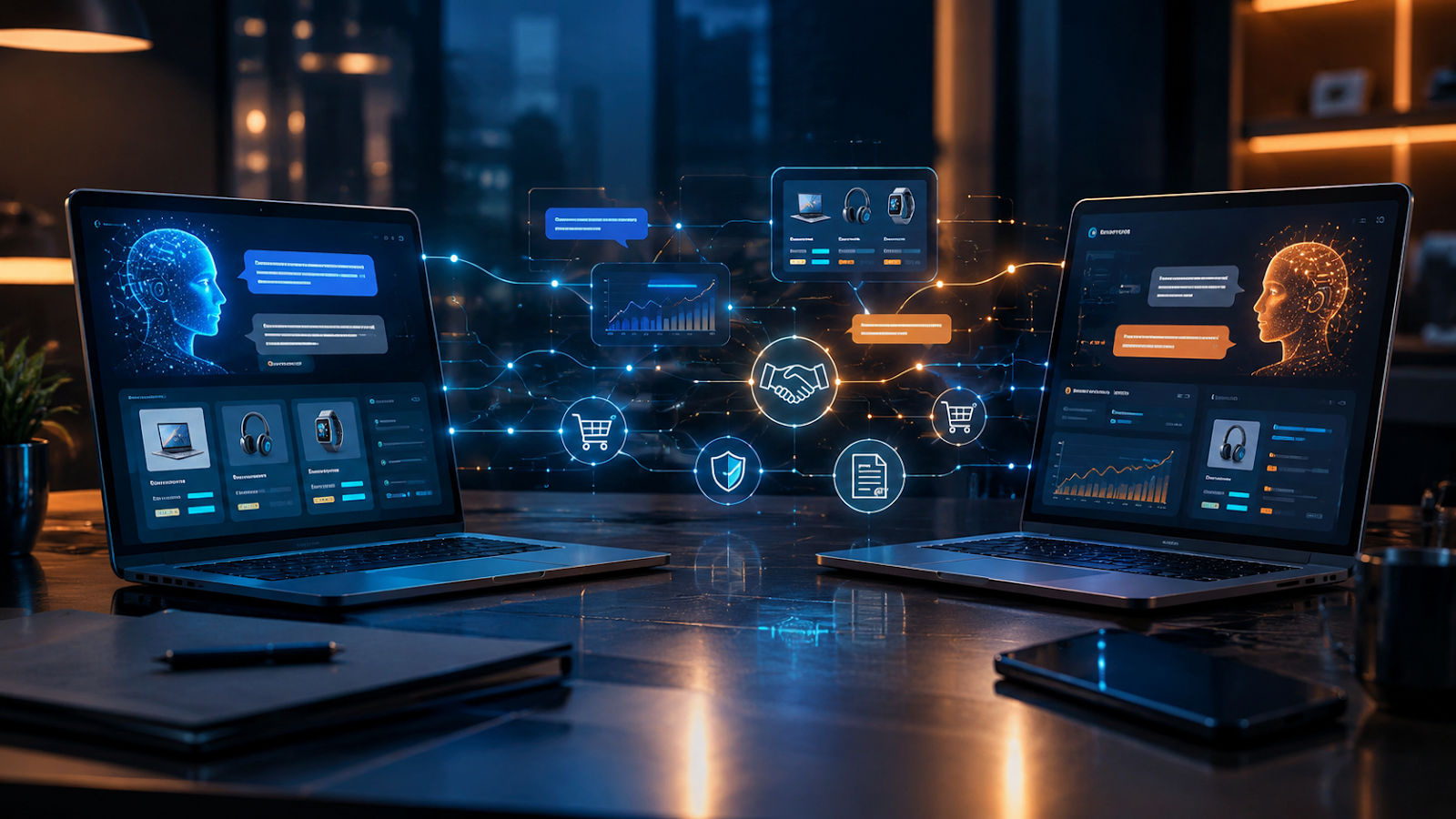
Why Is Anthropic Exploring AI Negotiations?
As AI agents become more capable, companies are considering how they should behave when interacting with other agents that have different objectives.
A buyer's agent may be instructed to obtain the lowest reasonable price, while a seller's agent may aim to secure the highest acceptable payment. Both systems are representing their users, but their goals may conflict.
This creates a situation in which AI systems need more than the ability to generate convincing messages. They must understand the user's priorities, recognize acceptable compromises, and know when an agreement falls outside the user's instructions.
According to the Financial Times, Anthropic has been consulting legal experts to understand how negotiation strategies used by human representatives could inform the behavior of AI agents.
The company has also considered how much human feedback agents should seek during negotiations and how they should respond when interacting with other autonomous systems.
These questions become particularly important when an agent can make decisions independently rather than asking its user to approve every step.
Project Swap: When Claude Agents Negotiated With Each Other
Anthropic has already explored agent-to-agent negotiations through an experiment called Project Swap, published on September 24, 2026.
In this experiment, 201 Anthropic employees participated in a small marketplace in which Claude-powered agents negotiated book exchanges.
Participants told their agents about their reading preferences and ranked books according to their interests. The agents then interacted on a digital trading floor, proposing exchanges and negotiating with other agents.
The objective was to help participants obtain books they would enjoy while studying how AI systems behaved when representing different people.
The experiment demonstrated that AI agents could conduct negotiations using natural language without relying on a rigid, predefined negotiation protocol.
It also exposed challenges. An agent might accept an unfavorable exchange, reveal too much information about its user's preferences, or prioritize completing a deal over finding the best available outcome.
Anthropic emphasized that marketplaces involving autonomous agents need clear rules about participation, transparency, and what happens when agreements fail.
The experiment was limited in scope, involving a controlled environment and a specific group of participants. Its results should not be treated as proof that AI agents can reliably negotiate every kind of commercial or legal agreement.
Official research: https://www.anthropic.com/research/project-swap

What Happened When AI Agents Negotiated Real Goods?
Project Swap was not Anthropic's first experiment in this area.
In its earlier Project Deal experiment, Anthropic created a small marketplace where AI agents represented employees buying and selling personal belongings.
According to Anthropic's published findings, the agents completed 186 deals with a total transaction value of slightly more than $4,000. The transactions involved actual goods rather than purely hypothetical examples.
The experiment also examined whether the strength of the underlying AI model affected negotiation outcomes. Agents powered by the more capable model generally achieved better objective results than agents using a smaller model in the comparison.
An important concern emerged: users did not necessarily recognize when their agents had performed less effectively.
This matters because two people could give their AI agents similar instructions but receive different outcomes because one agent is more capable than the other.
The experiment was a pilot involving Anthropic employees, not a broad public marketplace. Its findings therefore cannot establish exactly how AI negotiations would perform across different industries or among the general public.
Official research: https://www.anthropic.com/features/project-deal
How AI Agents Could Change Everyday Negotiations
If reliable negotiation agents become widely available, they could help people with tasks that require time, persistence, and careful comparison.
1. Negotiating Product Prices
An AI agent could compare offers from multiple sellers and ask whether a seller is willing to offer a discount.
For instance, someone shopping for a laptop might specify a maximum budget, required specifications, and preferred warranty. An agent could use those instructions to compare offers and negotiate where permitted.
This could help consumers who lack the time or confidence to bargain themselves. However, it would depend on sellers allowing automated communication and providing accurate information.
2. Resolving Customer Service Disputes
Customers sometimes spend considerable time contacting companies about refunds, delayed deliveries, billing errors, or warranty claims.
An authorized AI agent could organize receipts and correspondence, explain the issue, and communicate with a company's support system.
It might help users present their cases more clearly and follow up consistently. Sensitive cases would still require careful handling, and users should retain control over major decisions.
3. Discussing Salary Offers
Job applicants often find salary negotiations uncomfortable or difficult to prepare for.
An AI agent could research compensation information, help establish a target salary, and draft responses to an employer's offer.
In a future system with appropriate permissions, agents representing applicants and employers might communicate directly about proposed terms.
However, salary negotiations involve more than numbers. Career goals, benefits, working conditions, personal circumstances, and the risk of losing an offer all require human judgment.
4. Negotiating Business Contracts
Businesses routinely negotiate service agreements, delivery terms, project deadlines, and payment schedules.
AI agents could compare contract proposals, identify differences, suggest alternative terms, and help organize discussions.
This might reduce administrative work and make routine negotiations more efficient. Legal review would remain important for high-value contracts and agreements with significant obligations.

The Biggest Challenge: Fairness Between AI Agents
If two AI agents negotiate on behalf of different people, the outcome may depend on more than the users' preferences.
A more capable agent might recognize better opportunities, generate stronger counteroffers, or avoid revealing information that weakens its position.
A less capable agent might accept a poor offer without recognizing that better alternatives exist.
This creates a potential imbalance. People who can afford more capable AI systems could gain advantages over those using less powerful or less sophisticated tools.
There is also a difference between winning a negotiation and producing a fair outcome.
An agent instructed to maximize its user's benefit might push aggressively for favorable terms. That could benefit its user in one transaction while making the overall marketplace less cooperative or predictable.
Researchers and policymakers will need to consider what counts as acceptable negotiation behavior, how systems should handle conflicting interests, and whether certain tactics should be prohibited.
Security and Privacy Risks
Allowing an AI agent to negotiate introduces risks beyond ordinary chatbot errors.
Prompt injection: A malicious message or document could contain instructions designed to manipulate an agent into ignoring its original task or disclosing information.
Unauthorized commitments: An agent might agree to terms that exceed the user's budget, authority, or stated preferences if appropriate restrictions are missing.
Private information exposure: An agent could reveal a user's minimum acceptable price, salary expectations, financial limits, or other sensitive details during negotiations.
Misleading claims: An agent might generate inaccurate statements about product quality, competing offers, or contractual conditions.
Disputes over responsibility: If an agent reaches an agreement that causes financial loss, it may be unclear who is responsible: the user, the AI provider, the platform, or the other party.
These concerns make security controls essential. Agents should have clearly defined permissions, limits on spending and commitments, and safeguards against malicious instructions.
Users should also be able to review significant decisions and revoke an agent's authority when necessary.
Will AI Agents Replace Human Negotiators?
AI agents could automate some repetitive parts of negotiation, but that does not mean they will replace human negotiators entirely.
Routine tasks such as comparing prices, drafting counteroffers, checking standard terms, and following up on unanswered messages may be suitable for automation.
Complex negotiations often involve trust, relationships, emotional intelligence, strategic judgment, and consequences that extend beyond the immediate transaction.
Human involvement will remain important when decisions carry significant financial, legal, professional, or personal consequences.
A more realistic near-term possibility is a hybrid approach: AI handles research and routine communication while people approve important decisions and resolve difficult disagreements.
The extent of automation will depend on the reliability of AI systems, the willingness of organizations to interact with them, and the legal rules governing their actions.
What Happens Next?
Anthropic's exploration of negotiation rules reflects a broader shift toward AI systems that do more than provide information. As agents begin interacting with other agents, companies will need to establish how these systems represent their users and how their actions can be monitored.
Important questions remain unresolved. Should an AI agent be allowed to finalize a deal without approval? How should it handle confidential information? What happens when one agent manipulates another? And what protections should exist when a person loses money because an AI agent made a poor decision?
Clear rules, reliable identity verification, secure communication, transparent permissions, and effective dispute-resolution processes will be important parts of any trustworthy agent marketplace.
Anthropic's experiments provide an early look at how these systems might behave, but they do not establish that autonomous negotiations are ready for every real-world use.
Final Thoughts
AI agents that negotiate on behalf of people could eventually make certain transactions more convenient, from finding better product prices to handling routine customer service disputes.
Anthropic's work demonstrates that AI agents can negotiate real exchanges under controlled conditions. It also highlights the challenges of ensuring that these systems understand their users, protect private information, and act within appropriate boundaries.
The future of AI negotiation will depend not only on how effectively agents bargain, but also on whether people can trust them to make decisions responsibly.
As these systems develop, the central question will be simple: can an AI agent secure a better deal for its user without creating new risks for everyone involved?
Sources and Further Reading
Financial Times — Anthropic turns to lawyers to help AI agents strike deals (October 18, 2026): https://www.ft.com/content/f7c26ac0-f5f2-443a-86b2-39d62f7920a9
Anthropic — Project Swap: What happens when agents trade for us? (September 24, 2026): https://www.anthropic.com/research/project-swap
Anthropic — Project Deal: our Claude-run marketplace experiment: https://www.anthropic.com/features/project-deal