AI models are becoming increasingly focused on doing more than simply answering questions. Developers now want models that can understand large codebases, reason through complex problems, use tools, and work through multi-step tasks. MiniMax’s MiniMax-M3.1-Flash-Preview is designed around exactly these use cases.
According to MiniMax’s official model documentation, M3.1-Flash-Preview is an AI language model focused on agentic reasoning, tool use, coding, and long-context tasks. It is currently available through MiniMax’s Token Plan and MiniMax Code.
What Is MiniMax M3.1-Flash-Preview?
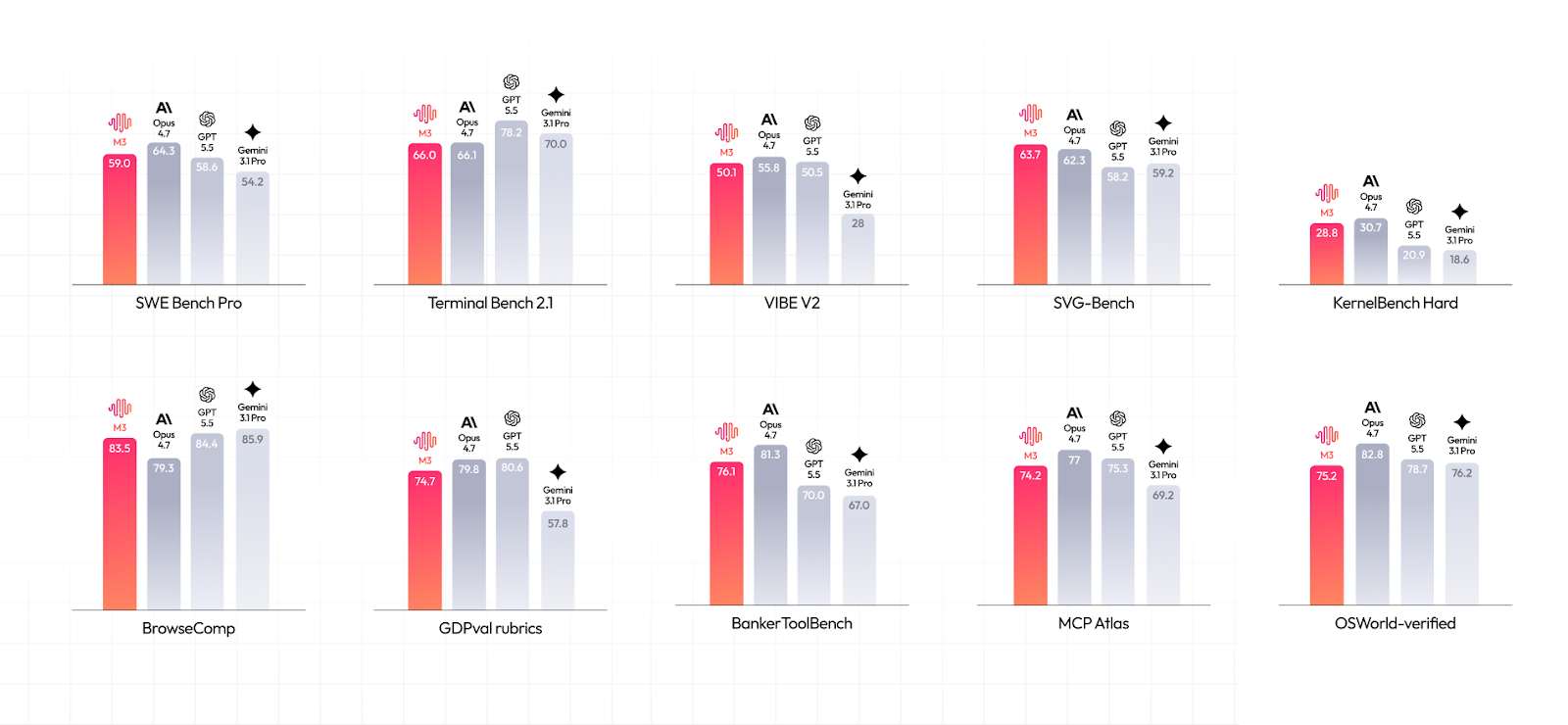
MiniMax-M3.1-Flash-Preview is part of the MiniMax M-series of AI models. Unlike a general chatbot designed mainly for everyday conversations, this model is aimed more directly at developers, coding workflows, and AI agents.
Its most notable features include a 1-million-token context window, agent and coding capabilities, adjustable reasoning depth, and multimodal input.
MiniMax's broader M3 model family is also built around coding, agentic tasks, long-context processing and multimodal capabilities. The company says its M3 architecture uses MiniMax Sparse Attention (MSA) to support context windows of up to 1 million tokens.
Why Does a 1-Million-Token Context Window Matter?
One of the biggest challenges with AI coding assistants is context.
Imagine giving an AI assistant a small function and asking it to fix a bug. That is relatively simple. But a real software project can contain hundreds or thousands of files, documentation, configuration files, tests and dependencies.
A model with a very large context window can keep much more of that information available while working on a task.
MiniMax lists 1,000,000 tokens as the context window for M3.1-Flash-Preview. This makes the model particularly relevant to use cases such as large codebases, long documents and complex multi-step tasks.
In practical terms, a developer could use a model with a large context window to help understand a large project before asking it to modify a specific part of the code.
Built for AI Agents, Not Just Chat
Another important part of M3.1-Flash-Preview is its focus on agent workflows.
A traditional chatbot usually follows a simple pattern:
Question → AI response
An AI agent can work differently:
Goal → Planning → Tool use → Execution → Checking → Result
This means the model can act as the reasoning layer inside a workflow where external tools, APIs, files or development environments are involved.
MiniMax's own products are moving in this direction. Its MiniMax Code platform connects to local files, tools and browsers and is designed to help users execute, organize, verify and deliver tasks.
For developers, this opens up use cases such as automated coding tasks, code review, debugging, research workflows and other multi-step processes.
A Thinking System You Can Adjust
M3.1-Flash-Preview also introduces configurable thinking depth through an effort setting.
The official documentation lists five levels:
low → medium → high → xhigh → max
Higher effort levels allow the model to spend more computation on reasoning, while potentially increasing latency and token usage.
This can be useful because not every task needs the same amount of reasoning.
For example, a simple code transformation may not require the same reasoning depth as debugging a complicated application or planning a multi-step agent workflow.
MiniMax says thinking is enabled by default for M3.1-Flash-Preview and cannot be completely disabled. Developers can instead lower the effort level when they want to reduce latency or token usage.
What Can Developers Use It For?
The model's capabilities make it relevant to several practical scenarios.
1. Coding and Debugging
Developers can use AI models like M3.1-Flash-Preview to generate code, understand existing code, identify bugs and work through implementation tasks.
This is especially relevant for larger projects where the model needs more context to understand how different files interact.
2. AI Coding Agents
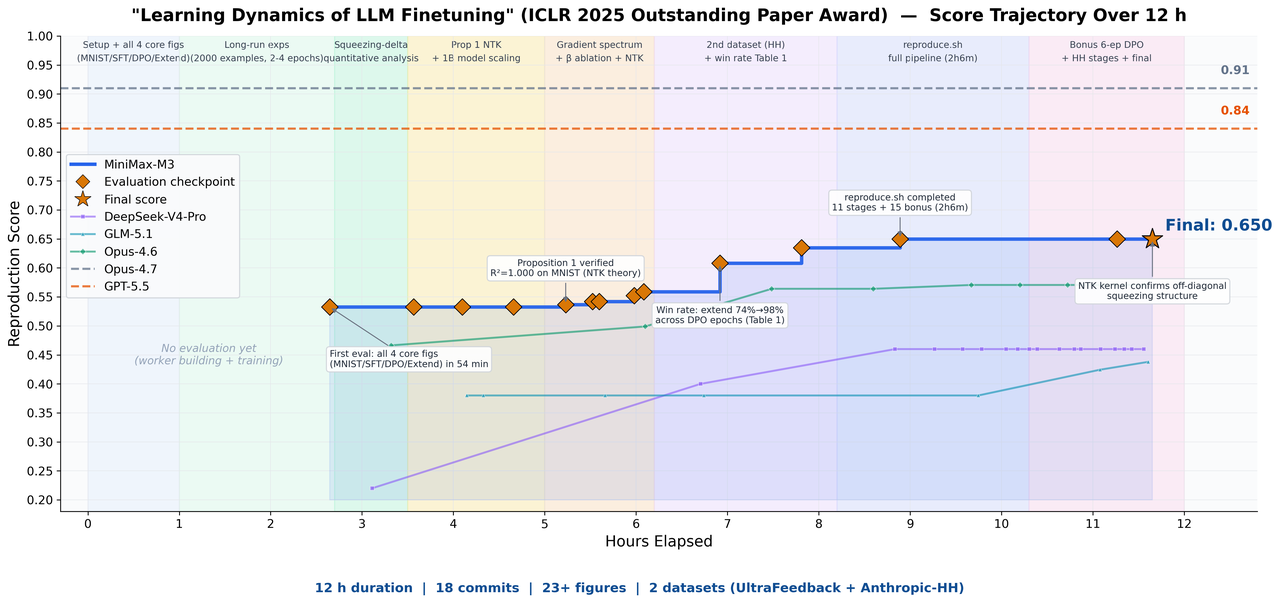
Instead of simply asking an AI to write one function, developers can build workflows where an AI agent plans a task, uses development tools, makes changes and checks the results.
MiniMax Code is designed around this kind of agentic workflow.
3. Large Documents and Projects
The 1-million-token context makes the model relevant for long documents and large repositories where keeping more information in context can be useful.
4. Multimodal Tasks
MiniMax's documentation lists multimodal input among M3.1-Flash-Preview's key capabilities. The broader M3 platform also describes native multimodal understanding, including image and video input.
This means the model family is not limited to text-only workflows.
Can You Try MiniMax M3.1-Flash-Preview for Free?
This is where users should distinguish between free access and paid API usage.
MiniMax's current documentation states that M3.1-Flash-Preview is available through its Token Plan and MiniMax Code. The MiniMax Code page currently says users can log in daily to claim free credits and use them for programming, office work, content creation and other tasks.
That does not mean the model has unlimited free API access.
Developers who want to integrate MiniMax models into their own applications can use the MiniMax API and Token Plan. MiniMax's current Token Plan page describes the plan as being designed for developers, coding users and high-frequency workloads.
So, for someone who simply wants to experiment, MiniMax Code is the easier place to start, while developers building their own applications can look at the API.
How Is It Different From a Regular AI Chatbot?
The biggest difference is the intended workflow.
A regular AI chatbot is primarily designed around conversation and answers. M3.1-Flash-Preview is positioned toward coding, reasoning, tool use and agentic workflows.
That makes it more interesting for developers who want AI to participate in the development process rather than simply answer programming questions.
MiniMax's broader M3 platform similarly emphasizes coding and agentic capabilities, long context and multimodal understanding.
The Bottom Line
MiniMax-M3.1-Flash-Preview is aimed at a growing category of AI models that are designed to work through tasks rather than simply respond to prompts.
Its 1-million-token context window, coding capabilities, agent-focused reasoning, adjustable thinking effort and multimodal input make it particularly relevant to developers building AI-powered coding tools and workflows.
For people who want to experiment, MiniMax Code provides a practical starting point, including a free-credit mechanism for users. For developers who want to integrate the model into their own software, MiniMax provides API access through its developer platform.
As AI moves from simple chatbots toward systems that can plan, use tools and complete longer tasks, models such as M3.1-Flash-Preview show where the next generation of AI development tools is heading.