
AMD Is Buying World Labs for $8.2 Billion. Here's What That Means for AI Images and Video
AI-generated images and video keep getting more realistic, and the next step is already taking shape: AI-generated 3D worlds. On September 28, 2026, AMD announced a definitive agreement to acquire World Labs, the AI research company led by computer-vision pioneer Dr. Fei-Fei Li, in an all-stock deal valued at about $8.2 billion. AMD expects the deal to close by the end of 2026, subject to regulatory approvals and customary closing conditions.
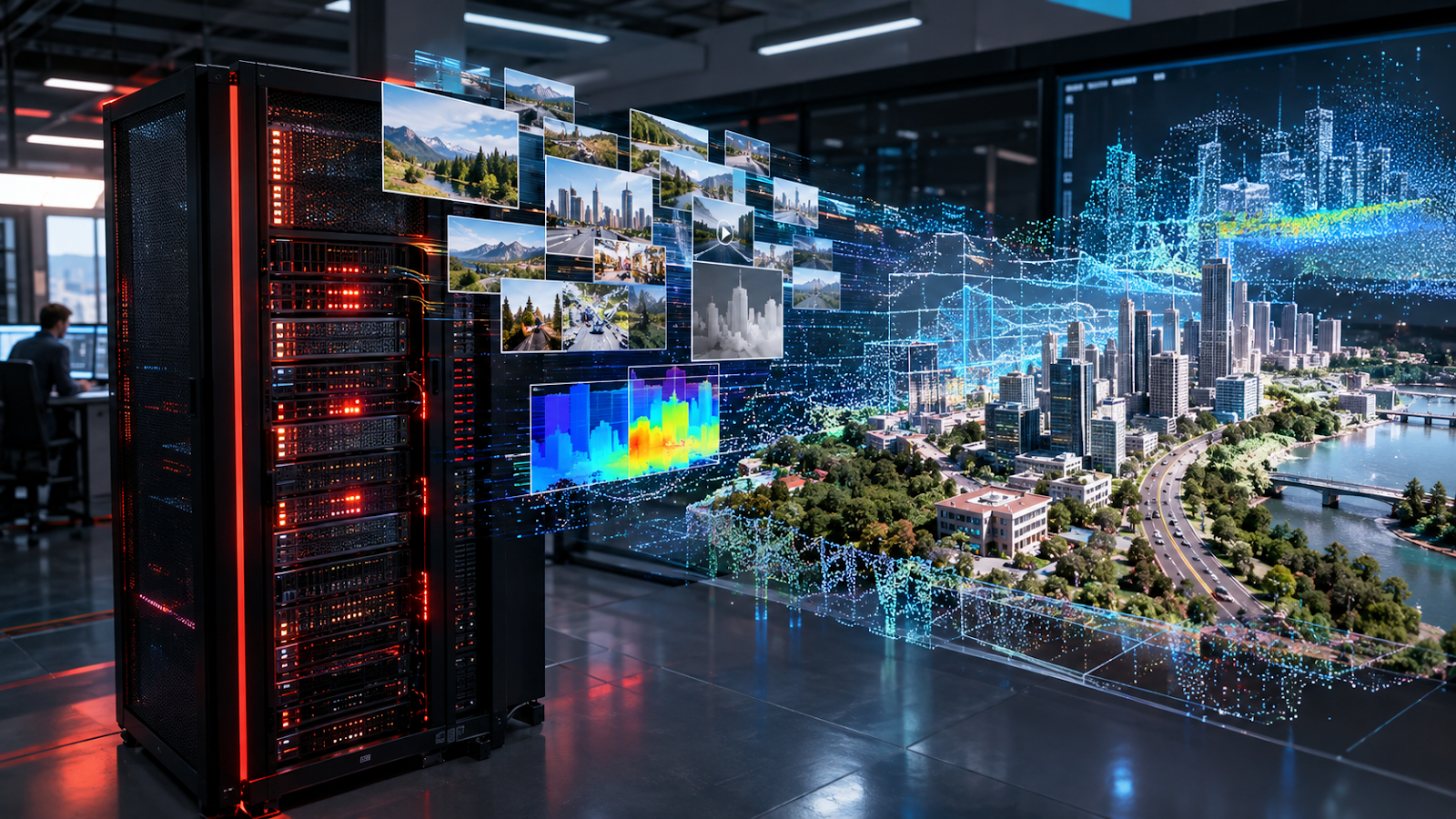
The deal puts a spotlight on spatial intelligence: the idea that AI should understand not just text, images and video, but the three-dimensional world they depict.
What Is World Labs?
World Labs is a research company building world models: AI systems that can generate, reconstruct and simulate 3D environments. It was founded by Fei-Fei Li, Justin Johnson, Ben Mildenhall and Christoph Lassner.
A conventional image generator produces one flat picture. A world model tries to understand the space behind it. Given a photo of a room, it attempts to work out where the walls and furniture are and how the scene would look from a different camera position.
Why Is AMD Paying $8.2 Billion?
According to Reuters, the two companies were already collaborating on model training and inference optimization using AMD GPUs before the announcement. So this isn't only about acquiring a software product.
The bigger reason is workload. As AI moves into robotics, simulation and physical environments, its computing demands look very different from those of a chatbot. AMD says bringing World Labs' researchers in-house will give it deeper insight into how these models work and what future hardware, software and systems will need to run them.
What Is a World Model?
The easiest way to see the difference is to compare two prompts.
Traditional image generation: "Create an image of a futuristic city."
World-model approach: "Create a futuristic city I can view from different camera positions, with buildings, roads and objects staying spatially consistent."
The second requires an understanding of space, depth, geometry and camera position, not just appearance. That is what World Labs means when it says its models generate, reconstruct and simulate possible worlds.
Atlas: World Labs' Newest Model
Only weeks before the acquisition, on September 1, 2026, World Labs introduced Atlas, which it calls an "omni world model" that natively works with text, images, video and 3D information.
Its standout feature is camera-controlled generation. Atlas can take one or more reference images and generate new views from specified camera positions and angles. World Labs says it can produce videos of up to one minute at 1440p from a small number of reference images and a manually designed camera path.
For AI video, that changes the workflow. Instead of typing "camera moves through a futuristic room" and hoping for the best, a creator can supply visual references and define exactly how the camera travels. Atlas then tries to keep the space consistent throughout.
From One Image to Many Angles
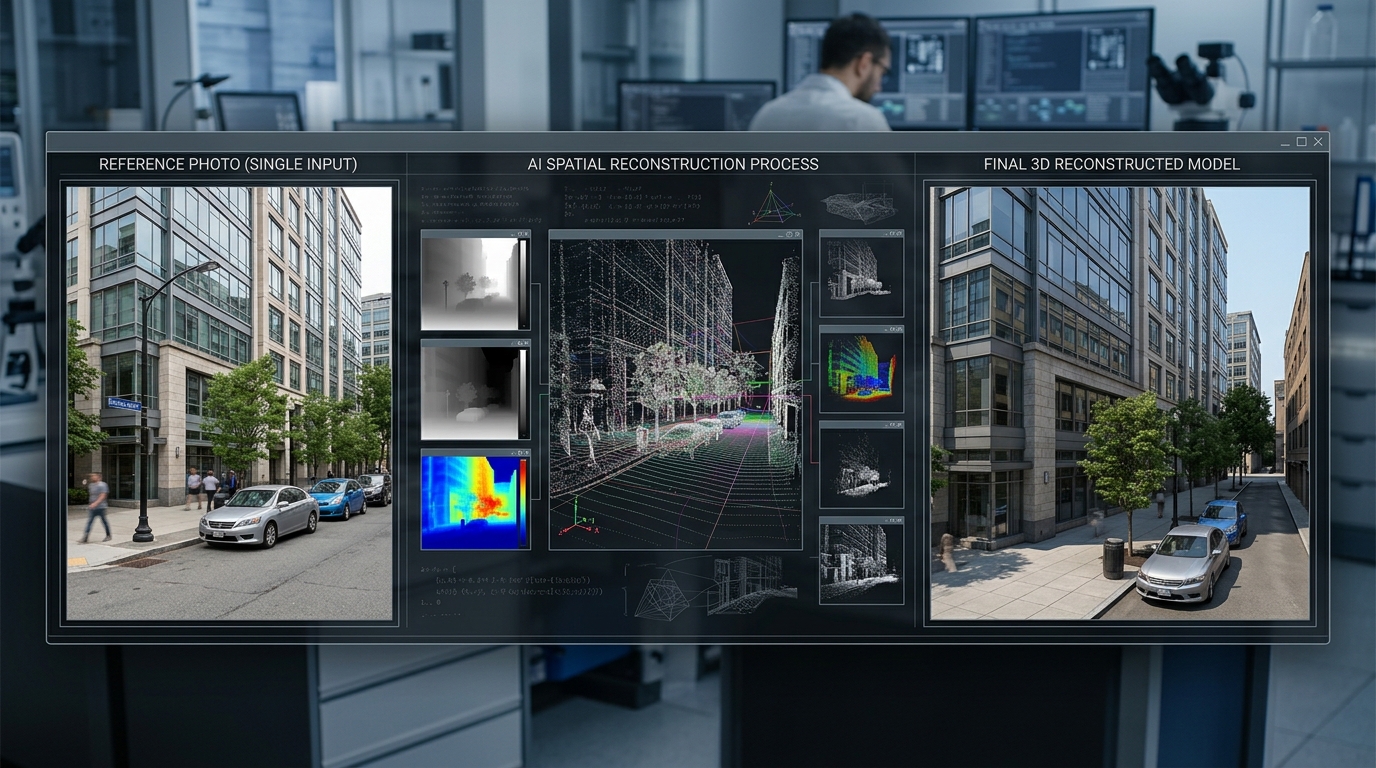
World Labs says Atlas can reconstruct real-world scenes from anywhere between one and dozens of input images. Where information is missing, the model infers plausible details from its learned understanding of the world. More input images make the result more faithful to the real location.
This limitation matters. If an AI sees only the front of a building, it doesn't know what the back looks like; it can only guess. World Labs acknowledges this: with limited views, Atlas may imagine unseen areas. That makes the technology powerful, but AI-generated 3D environments shouldn't be treated as exact digital copies of reality.
Marble: Exploring Generated Worlds
World Labs also built Marble, a platform for creating and exploring generated 3D worlds from text, images and video. Atlas is intended to power future versions of Marble and other World Labs products.
Generative AI has followed a clear progression:
Text → Image → Video → 3D World
The goal is no longer a single frame but an environment you can view from any perspective.
Why This Matters for AI Video
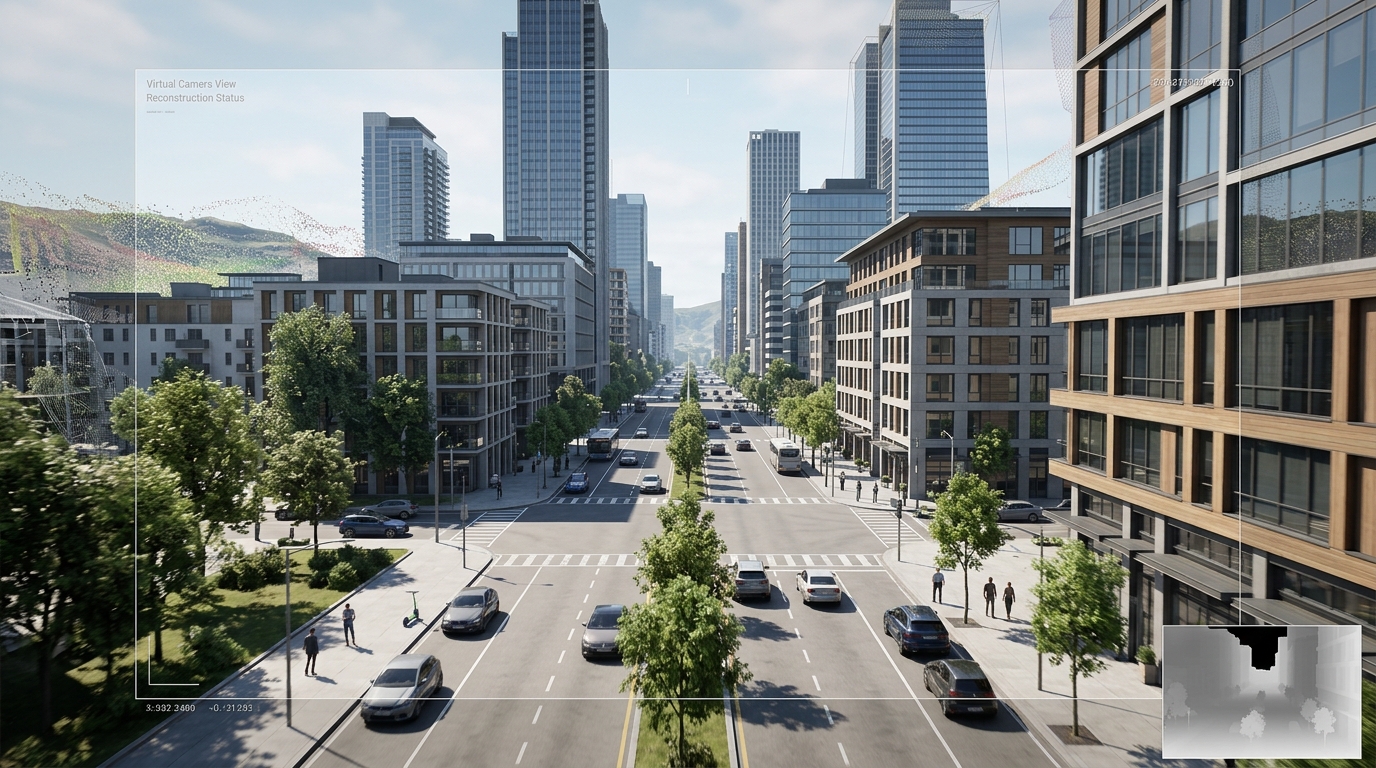
The biggest weakness of AI video is consistency. Objects change appearance between frames, buildings shift shape, and camera movement produces impossible geometry. The model generates impressive frames without a reliable understanding of the scene.
World models attack this at the root. If a system maintains a spatial representation of the scene, it can generate new camera views while keeping the environment stable. World Labs says Atlas uses a 3D spatial context in which images and depth information are tied to specific positions in space, giving finer control over camera movement and scene generation.
Potential uses include:
Film and VFX: testing camera angles and virtual environments
Gaming: prototyping 3D environments
Architecture and design: turning visual concepts into explorable spaces
Robotics: building simulated training and testing environments
VR and AR: generating spaces users can explore
These are potential applications, not a claim that each one is already commercially available.
Robotics and Real-to-Sim
World Labs says Atlas can also be used for robotics simulation through a process it calls Real-to-Sim. A real environment is reconstructed from a small number of images or video frames, then used to simulate robot movement. According to the company, Atlas can generate RGB and depth data from a simulated robot's viewpoint.
This matters because training robots in the physical world is slow and expensive. A realistic simulation lets researchers test movements, objects and conditions first, then transfer some of that learning to real machines.
What Will Fei-Fei Li Do at AMD?
If the deal closes, Fei-Fei Li will join AMD as executive vice president and chief scientist, reporting to CEO Lisa Su, as confirmed by both AMD and Reuters. AMD says the World Labs team will keep focusing on AI model research.
So AMD is getting more than technology. It is bringing a prominent computer-vision researcher and her team directly into its AI organization.
The Bigger Picture
Generative AI began with single images, then moved to increasingly capable video. The next step may be full environments. Developers increasingly want AI to understand where objects are, how they relate to each other, how a camera can move through a scene, how environments change over time, and how a robot or agent can interact with them.
World Labs is building models around that idea, while AMD is betting that understanding those models will help shape the computing infrastructure the next generation of AI needs. The deal is still pending, so its long-term impact is unknown. But the direction is clear: AI-generated content is moving from pictures and clips toward spaces and worlds.
Frequently Asked Questions
What is World Labs?
An AI research company focused on spatial intelligence and world models that generate, reconstruct and simulate 3D environments.
How much is AMD paying?
About $8.2 billion, in an all-stock transaction.
When was it announced?
September 28, 2026.
Is the acquisition complete?
No. AMD expects it to close by the end of 2026, subject to regulatory approvals and customary conditions.
What is Atlas?
World Labs' world model, announced September 1, 2026. It works with text, images, video and 3D information and supports world generation, reconstruction and simulation.
What is Marble?
World Labs' platform for creating and exploring 3D worlds from text, images and video. Atlas will power future versions of it.
Can Atlas generate AI video?
Yes. According to World Labs, it can produce camera-controlled videos of up to one minute at 1440p from a few reference images and a designed camera path.


